Cleaning gutters is an easy task to postpone, especially if rainwater appears to drain well and there are no leaks inside the house. A few leaves in the gutter might not seem like a big deal.
But problems often begin in areas you can’t see. If debris blocks water from reaching the downspout, rain can spill over or leak behind the gutter. This water can soak the fascia and soffits along the roof. Over time, the moisture may reach the attic and insulation By the time you see a stain on your ceiling, the insulation above it may already be wet, matted down, or compressed.
This is how clogged gutters and attic insulation damage are connected. Overflowing water saturates the wood at the edge of the roof, moisture gets into the attic, and wet insulation loses some of its R-value. If the area stays damp, you may also have to deal with mold control and attic insulation problems.
Before the heavy leaf drop in North Georgia, it’s wise to do a gutter and attic inspection.
Gutters catch rainwater coming from the roof and direct it toward the downspouts. Leaves, twigs, and other debris can get in the way.

When water can’t drain, it may pour over the front of the gutter or run behind it. If this is happening repeatedly, the wood along the roofline stays wet much longer than it should. Eventually, you could end up with gutter overflow and fascia rot. Roof overhangs and drip-edge flashing also help keep water away from the wood trim. Overhangs should extend at least 12 inches, ideally 18 inches.
Gutters also need more than an annual cleaning. Clean, inspect, and repair them regularly, and check again after major storms. Look for gutters that are sagging, pulling away from the fascia, or not draining the way they should. At that point, you may be dealing with more than just a few leaves. If the gutters are damaged or not draining properly, consider gutter installation services.
The fascia and soffits help protect the edge of the roof. If they keep getting soaked, the wood can start to soften or break down. Once those areas are compromised, wind-driven rain can get in more easily. Humid air can also move through gaps around the damaged wood and add more moisture to the attic.
Downspouts are important. Make sure water flows at least 10 feet downhill and away from the foundation. Splash blocks alone aren’t enough.The water you see spilling over the gutter may only be the first sign. If the same area stays wet from one storm to the next, moisture can eventually travel farther into the house.
Insulation works best when it stays dry. Once it gets wet and starts to mat down or compress, it doesn’t work as effectively. That’s where wet insulation and R-value loss become an issue, particularly near eaves, roof valleys, or other places where water may enter.
It can also undercut some of the energy savings you expect from insulation in the first place. Sealing air leaks and adding insulation in attics, floors over crawl spaces, and basements can save an average of about 15% on heating and cooling costs. Wet insulation cuts into that benefit.
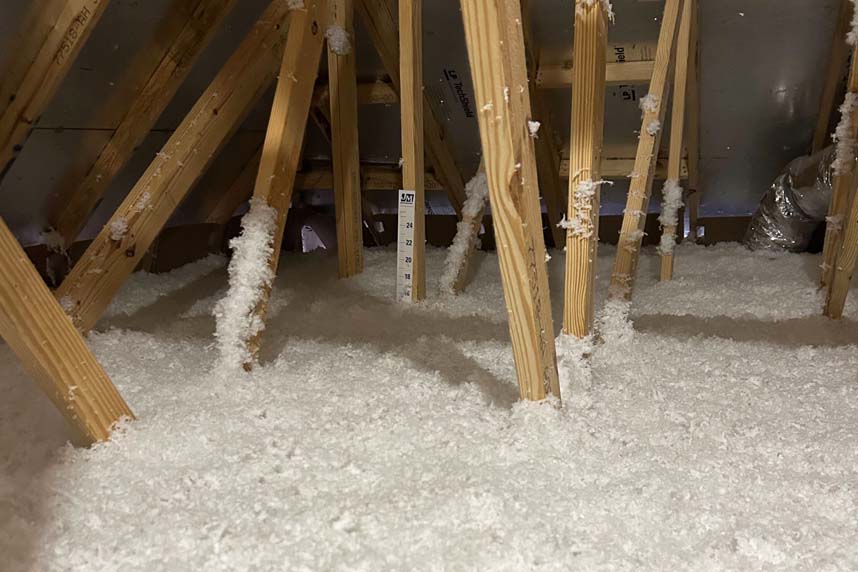
If moisture has already made its way into the attic, attic insulation services can help determine how much of the material has been affected. Understanding how insulation works can explain why water damage changes its performance.
A damp attic can become a mold issue. Controlling moisture is essential to controlling mold. If the water problem continues, mold can return even after the affected area is cleaned.
Georgia’s warm, humid climate (Zone 3A) can make the problem worse. Attics already deal with humidity for much of the year, so extra moisture around the roofline may not dry quickly.
Good attic moisture control starts with finding and fixing the source of the water. From there, you can evaluate the wet insulation, damaged materials, and any mold growth to determine what needs to be managed, mitigated, or remediated.
Some warning signs show up outside long before there’s a stain on the ceiling. The next time it rains, watch the gutters. Water pouring over the front instead of moving through the downspout indicates a blockage. Sagging sections, loose fasteners, or gutters pulling away from the house are also worth a closer look.
Check the fascia and soffits. Dark streaks, peeling paint, or wood that looks soft or spongy can signal repeated water exposure.
Scheduling fall gutter cleaning in North Georgia before the heaviest leaf fall gives you a chance to clear debris and spot trouble. Regular gutter maintenance in Cumming, GA should also include checking for new debris or damage after major storms.
Check the insulation near the eaves and under the roof valleys. If moisture has seeped in, the insulation may look flat, clumped, or darker than the surrounding area. A musty smell or staining on the roof decking is another telltale sign.
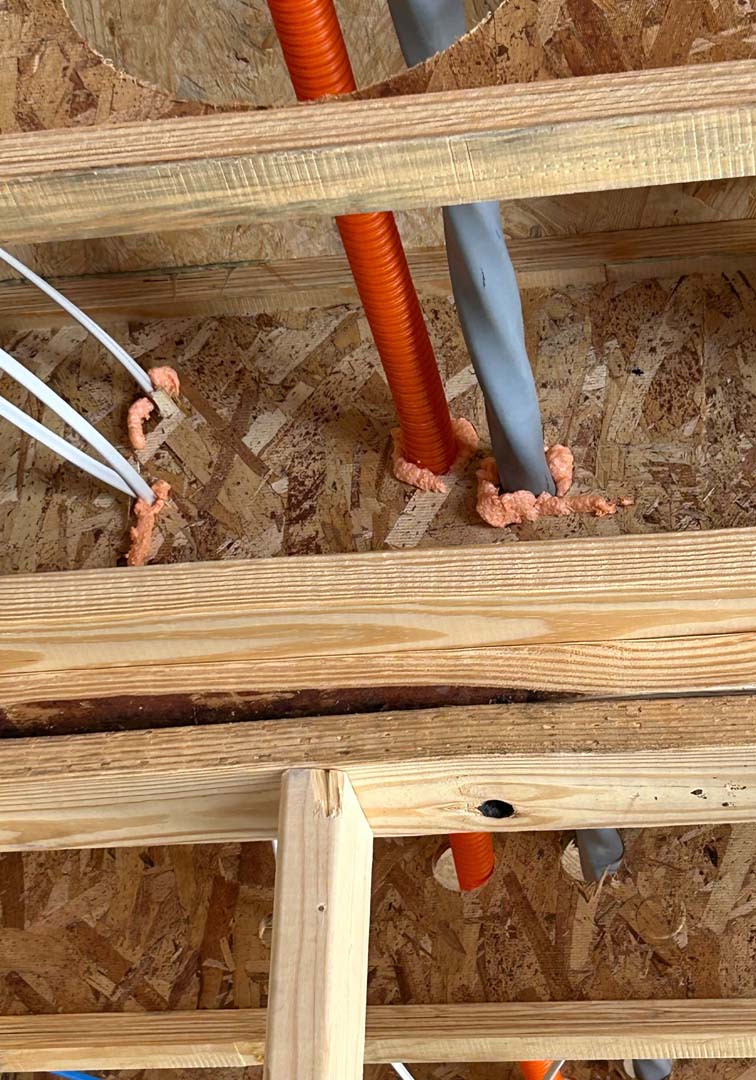
If you find any of these signs heading into October or November, have a professional check the attic to see how far the moisture has spread and whether any insulation needs replacing.
It’s also a good idea to look at the air sealing while the insulation is being evaluated. Gaps that let humid air into the attic can worsen existing moisture problems.
Yes. Water that keeps getting behind the gutter can soak the fascia and soffits and eventually make its way into the attic. If the damp area never really dries out, mold can become a problem.
Wet insulation may look darker or more compressed than the surrounding material. You may also notice a musty smell near the eaves or roof valleys.
The general recommendation is to clean them at least twice a year, with another check after a major storm. In North Georgia, one of those cleanings should happen before the leaves really start coming down.
It depends on the material and how wet it became. Heavily saturated insulation usually needs to be removed and replaced rather than left to dry. A professional can assess the condition before you decide what to keep and what to remove.
No. Fixing the gutters takes care of the water source, but any wet insulation still needs to be checked. Damaged fascia, soffits, or air-sealing gaps may also need work.
A clogged gutter can set off a chain reaction: water overflows, fascia and soffits stay wet, moisture reaches the attic, and insulation gets damaged.
Before North Georgia’s fall leaf season gets into full swing, checking the gutters and attic together can help catch the problem earlier. Contact Woodman Insulation to assess your gutter system and attic insulation to see what needs attention.
References
Kirby, Sarah. "Moisture Control and Prevention: Gutter Management." NC State Extension Publications, North Carolina State University, 20 Apr. 2022, content.ces.ncsu.edu/moisture-control-and-prevention-gutter-management.
United States Environmental Protection Agency. "A Brief Guide to Mold, Moisture and Your Home." EPA, www.epa.gov/mold/brief-guide-mold-moisture-and-your-home.
United States Environmental Protection Agency. "Why Seal and Insulate?" ENERGY STAR, www.energystar.gov/saveathome/seal_insulate/why-seal-and-insulate.
Salcido, V. Robert, et al. Energy Savings Analysis: 2024 IECC for Residential Buildings. U.S. Department of Energy, Office of Energy Efficiency and Renewable Energy, Dec. 2024, www.energycodes.gov/sites/default/files/2024-12/2024_IECC_Determination_TSD.pdf.