When considering upgrades or installations for commercial roof insulation, property owners in Georgia face unique challenges and opportunities. Insulation plays a pivotal role in managing interior temperature, reducing energy bills, and enhancing a building's overall comfort. This blog post will guide you through the essential questions to ask your insulation expert, ensuring you make the most informed decisions for your property.
Commercial insulation and air sealing are critical to your building's thermal barrier, preventing heat from escaping in colder months and blocking heat from entering in warmer months. Installing effective insulation and air sealing helps maintain a consistent temperature, leading to lower energy bills and a more comfortable environment for occupants. Understanding the role of insulation can help you see the benefits beyond cost savings.
Professional insulation and air sealing work to keep your building cool during hot Atlanta summers and warm in winter. They allow your HVAC system to work proactively rather than reactively, lowering your energy bills and maintenance costs.
Insulation and air sealing help keep temperatures more even throughout the building. This reduces hot and cold spots, making the space more comfortable for employees and customers.
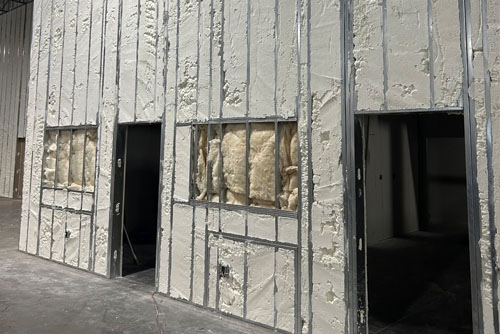
Air sealing helps keep out dust, pollen, humidity, and outdoor pollutants. This can create a cleaner, healthier indoor environment.
Keep your HVAC unit running smoothly for longer. Without air constantly leaking out of your building, your HVAC unit can run more efficiently. This can extend the life of your equipment and reduce maintenance costs.
Atlanta’s humidity can cause mold, mildew, and building damage. Air sealing and insulation work together to help control moisture and protect your structure. The type of insulation and proper installation determine the level of effectiveness. Closed-cell spray foam provides a strong vapor barrier to keep moisture out.
Insulation helps lessen outside noise from traffic, neighboring businesses, or mechanical equipment. This creates a quieter, more productive workspace.
Reducing energy consumption and meeting local energy codes can help you meet your quantifiable sustainability goals and qualify for energy incentives.
Insulating and air sealing the right parts of your commercial building can make a big difference in comfort and energy savings, especially in our hot and humid climate. These are the areas that have the biggest impact:
Valuable heat rises and easily escapes through your building’s roof during the winter months. In the summer, the roof warms up quickly from the direct sunlight, absorbing a lot of heat while cool air escapes. Adding insulation and air sealing here keeps cool air inside in summer and warm air inside in winter while reducing strain on your HVAC system.
Insulated and air sealed walls provide another layer of protection that helps keep outdoor heat and humidity from entering your building. This helps maintain steady indoor temperatures and lowers energy costs.
Places such as doors, windows, vents, and wall openings often allow conditioned air to escape. Sealing and insulating these areas can improve efficiency right away.
These spaces contain equipment that can generate heat or dissipate energy. Insulating them helps protect equipment, control temperatures, and improve safety.
The choice of insulation material can significantly affect the performance and cost-effectiveness of your project. Common materials for commercial buildings in our Georgia climate include spray foam, rigid foam board, and fibrous materials such as fiberglass batts and mineral wool. Each has advantages and suitability depending on your building's design and climatic conditions.
This expanding foam fills gaps and cracks to provide excellent insulating and air sealing in one step. It comes in two forms- closed-cell and open-cell- that work well in hard-to-reach spaces. Closed-cell spray foam provides a strong vapor barrier to keep moisture out. Spray foam is often used for exterior and interior walls, roof decks and attics, crawl spaces and basements, and around windows, doors, and gaps.

Fiberglass insulation is a cost-effective, dependable, and easy-to-install choice. It’s widely used for interior and exterior walls, ceilings, and attics, and between floors. It works well as a thermal barrier and for noise reduction, but requires a vapor barrier for areas where moisture intrusion is a concern.
These dense, rigid panels offer a high R-value (insulating power) per inch, add a continuous insulation layer, and help prevent thermal bridging. It also helps resist water absorption. It is often used for flat or low-slope roofs, exterior walls under siding, and in foundation walls.
Made from natural stone or steel slag, this insulation is best known for its superior fire resistance and high R-value. It also provides excellent sound absorption and moisture resistance. It’s often used for fire-rated walls and ceilings, mechanical rooms, industrial areas, and sound-sensitive spaces.
If you are looking to upgrade your insulation, it’s important to conduct a thorough assessment of your current insulation before making any changes. Your insulation expert can evaluate the effectiveness of existing materials and identify any areas of energy loss. This step is vital in determining whether to supplement existing insulation or opt for a complete replacement, ultimately influencing the project's scope and cost.
The amount of insulation (or proper R-value) you will need for your building is determined by building type, use, and local code requirements and energy standards. The metro Atlanta area is classified as Climate Zone 3 and follows the 2015 International Energy Conservation Code. All newly constructed commercial buildings must meet these code requirements and R-value levels for energy efficiency. The goal is to ensure your project, whether a new build or a retrofit project, is compliant with today’s standards and cost-effective.
While the initial cost of installing or upgrading commercial roof insulation can be substantial, the long-term savings on your energy bills and operating costs should also be considered. Your insulation expert can provide a detailed cost-benefit analysis that offers insights into the projected savings and payback period, helping justify your investment.
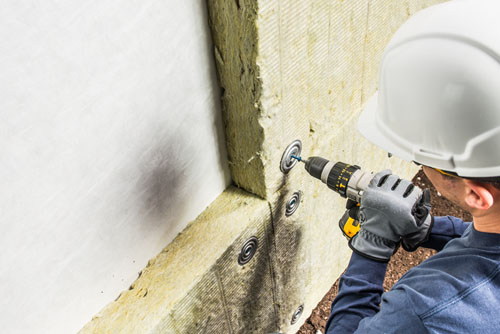
Proper maintenance also plays a part in the return on your insulation investment. It helps ensure that your insulation performs effectively over its intended lifespan. Discussing maintenance requirements with your insulation pro can help you understand what actions you need to take to maintain your insulation’s efficiency and prevent material degradation over time.
Upgrading or installing new commercial insulation is a significant decision that can impact your property's energy consumption, operational costs, and comfort levels. By asking the right questions and choosing a reliable partner like Woodman Insulation, you can ensure your investment is sound with long-term benefits.
Choosing our expert team for your commercial insulation needs means partnering with a leader in the building science industry. Our expertise in the latest insulation technologies, our commitment to quality, and our focus on customer satisfaction set us apart from our competition.
We understand the local climate challenges and building codes in north central Georgia, ensuring that every project meets high standards for efficiency and durability. Working with us brings peace of mind, knowing that your insulation needs are handled by professionals dedicated to maximizing your property's energy efficiency and comfort.
Contact us today and take the first step towards a more efficient and comfortable commercial property.